"I've lost weight, but my arms and thighs look exactly the same."
"How many liters can you take out?"
If you are looking into liposuction in Korea, you may be stuck on one of these. The fat that stays after diet and exercise is frustrating. And when you read about clinics abroad, the numbers that get the most attention are liters removed. It is hard to know what a good result looks like, or what to worry about after surgery when you are back home.
This post is worth reading before you choose a clinic in Seoul, because the questions that predict a good result are different from the ones most people ask.
By the end you will know:
- what liposuction can and cannot change
- how I plan each area so the line stays smooth
- why skin can look lumpy in the first weeks, and when it is a real problem
- what real results look like at 3 months, and what one patient said while recovering
- a realistic recovery timeline, how long to stay in Seoul and what to do at home
- what decides the cost and what to ask any clinic
Who is writing this
I am Dr. Im Jung-woo, representative director of LAHYEON Plastic Surgery in Cheongdam, Seoul. I am a board-certified general surgeon. I trained at Samsung Medical Center (Sungkyunkwan University), where I also served as an adjunct professor of surgery. I am also a member of the Korean Academy of Obesity & Aesthetic Treatment. My work now centers on body surgery: liposuction, fat grafting, breast surgery and body filler. I see each patient from consultation through surgery and follow-up.
I wrote this because the questions I hear after liposuction are often the same, and many of them could be answered before surgery. More about me is on my doctor page.
What does liposuction actually change?
Liposuction removes fat that has built up under the skin. Because it removes fat cells from the treated area, the number of fat cells there goes down and rebound in that area is less likely. Keeping a steady weight with sensible eating and exercise still matters.
Weight and body shape are two different things. Some people lose weight from the upper body first and keep it in the thighs. Others slim down at the waist but keep the arms. Liposuction changes the line of a specific area. It is not a weight-loss treatment.
Why I ask how evenly to leave fat, before how much to take
In liposuction I always care more about "how evenly will the fat be left?" than "how much will come out?"
An even layer of fat needs to stay under the skin for the surface to look smooth. If one spot is thinned too far and the spot beside it keeps much more fat, the border between them shows as a dent or a bulge. I find it more accurate to describe liposuction as adjusting the thickness of the fat under the skin.
Why borders between areas matter
Take the arm. If only the middle of the upper arm is suctioned hard and the volume just below the shoulder or around the elbow is left, the arm does not look slimmer overall. It looks pinched in the middle. So for arms I look at the whole run from shoulder to armpit, bra line and elbow. Part of the back that connects to the arm can be treated at the same time.
The abdomen works the same way. If the front gets much flatter but the flanks and waist do not connect to it, the line looks fine from the front and breaks at 45 degrees or from the side. The abdominal fat layer is thick, so full-layer liposuction tends to give a clear change, which is exactly why the edges need planning.
Thighs are a common area. The thigh is roughly a cylinder, so I plan the line from pelvis to outer thigh to knee as one shape.
Love handles often stay despite diet and exercise. I remove them while keeping a soft curve at the waist.
Is Liposuction right for you?
Tap what applies. We turn it into an inquiry, and our team replies with suggested next steps for your trip.
Hello, I'm interested in Liposuction at LAHYEON Plastic Surgery. Could you suggest a plan for me?
No booking until you confirm.
The body is three-dimensional
A single photo makes the body look flat. It is not. An area can look fine from the front and still hold volume from the side. The side can be smooth while something stands out at 45 degrees.
So before surgery I check you from the front, at 45 degrees and from the side, more than once. During surgery I keep thinking about how each area connects to the next. A good body line, to me, is one that reads smoothly from several angles.
Skin elasticity changes the result
Remove the same amount of fat from two people and the skin follows differently. Skin with good elasticity tends to shrink and follow the new line. Skin that is already loose may not shrink fully, and it can look creased or uneven.
That is why I check skin thickness, elasticity and existing laxity before surgery, and why I sometimes suggest skin-tightening care for some patients. I do not suggest it to everyone, and I do not suggest it lightly.
Liposuction for the face
We also treat the double chin and deep fat in the lower cheeks, using fine instruments, to make the face look lighter and the jawline clearer. We use a manual, hand-controlled technique to limit adhesion and sagging and to encourage the skin to tighten. How your skin responds still varies, so I check it at consultation.
"How many liters?" is the wrong scorecard
I am asked this a lot. The amount removed is one piece of information. It does not tell you the quality of the result. Removing 3,000cc is not automatically better than removing 2,000cc.
What matters is where fat was taken, where it was left, how the skin responded and whether the line connects. To give a sense of scale, if you do the arithmetic, an adult woman's arm, bone, muscle and fat included, is roughly 1.5 to 2 liters per side. Keep that in mind when you see large numbers quoted.
I do not aim for the thinnest possible body. A body needs some natural volume for its curves to show. The goal is a line that does not dip, does not bulge and connects smoothly.
Lumps after liposuction: what is normal?
"My skin looks lumpy." "This part dips and the part next to it sticks out." I hear these often in the weeks after surgery, and they deserve a straight answer.
Right after liposuction several things happen at once. Swelling develops, fluid can collect between tissues, and healing tissue under the skin can feel firm. So early on one side may look fuller, some spots may feel hard, and the surface may not look smooth.
Not every area settles at the same speed. Some tissue firms up during healing, a kind of fibrosis, and can be felt as cords under the skin. I call the first week after surgery the hardest week, because that is when patients worry most.
Does an uneven surface mean you need revision? Not by itself. I look at how long it has been since surgery, whether the area is hard or soft, whether it is changing over time and whether there is a real difference in fat thickness. Depending on the stage, compression, aftercare and care that helps swelling and tissue settle are options. If a clear dent or bulge remains after full recovery, I assess the cause and plan a correction separately.
The main thing is not to treat the early picture as the final one.
What do real results look like?
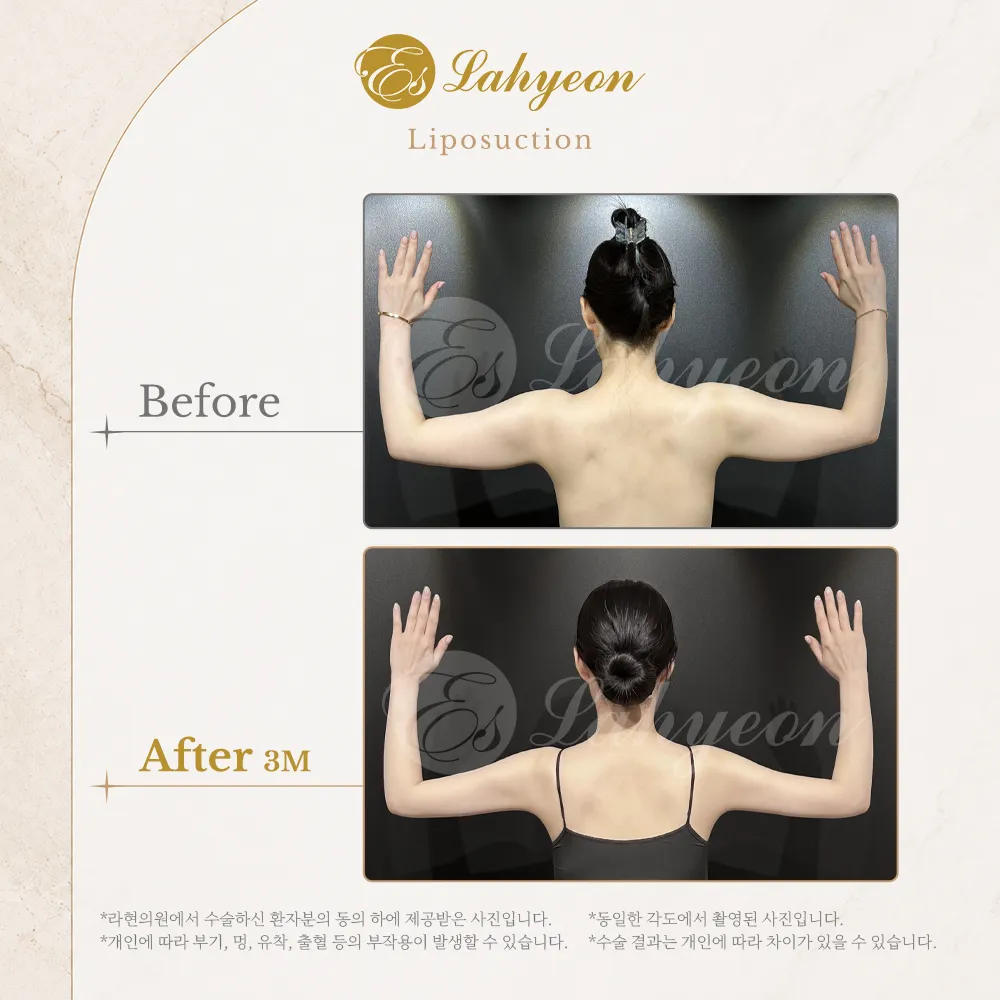
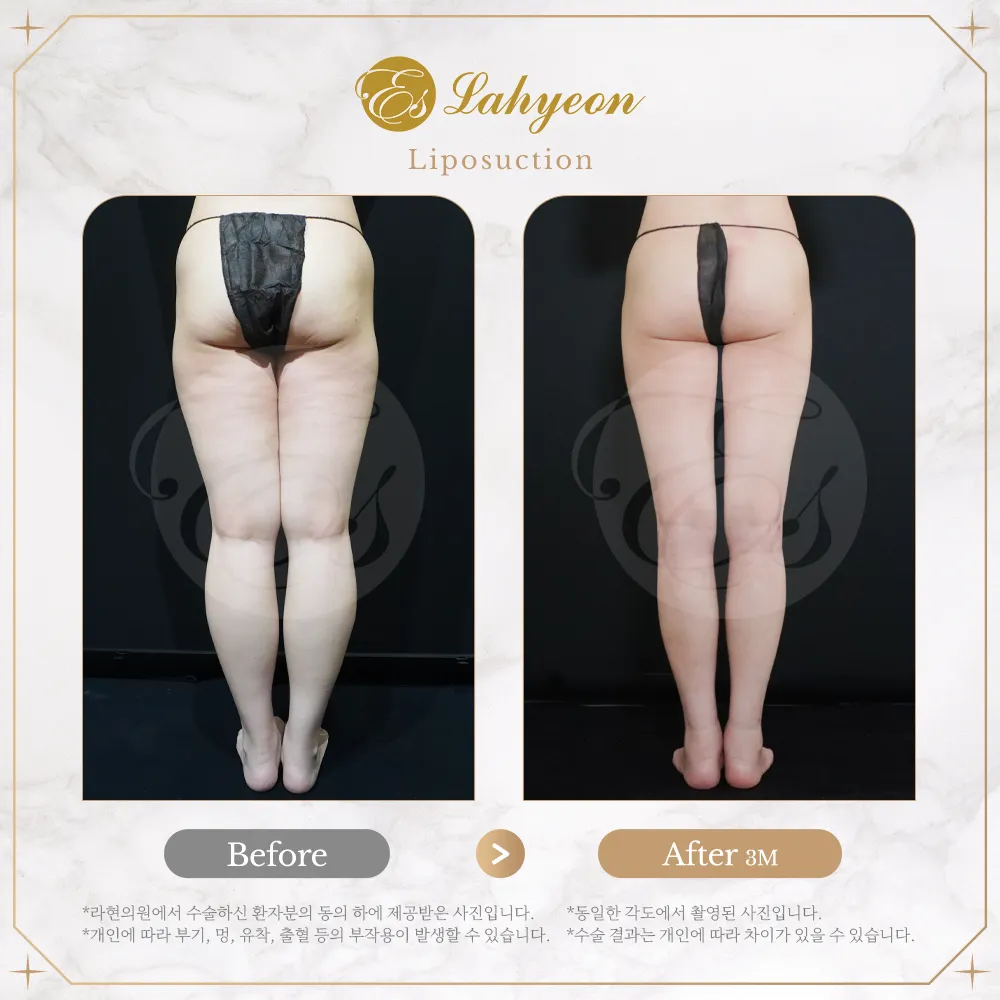
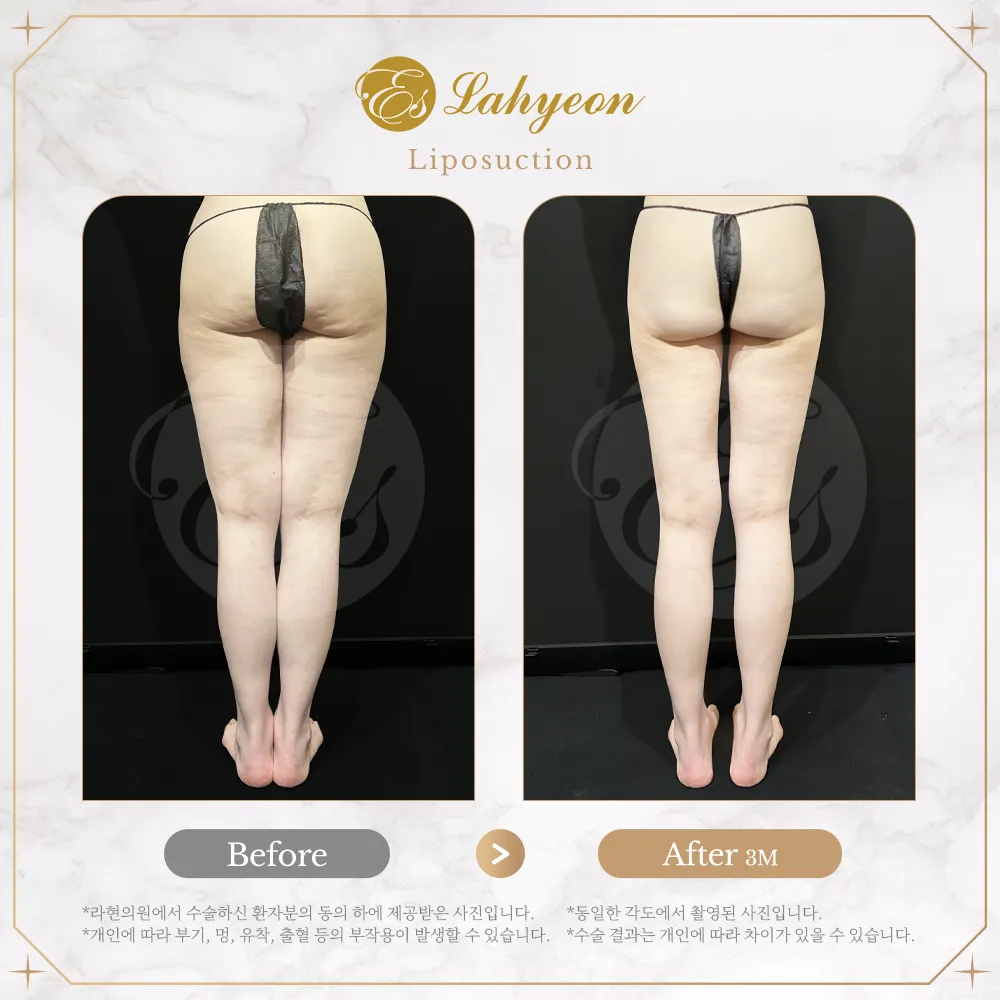
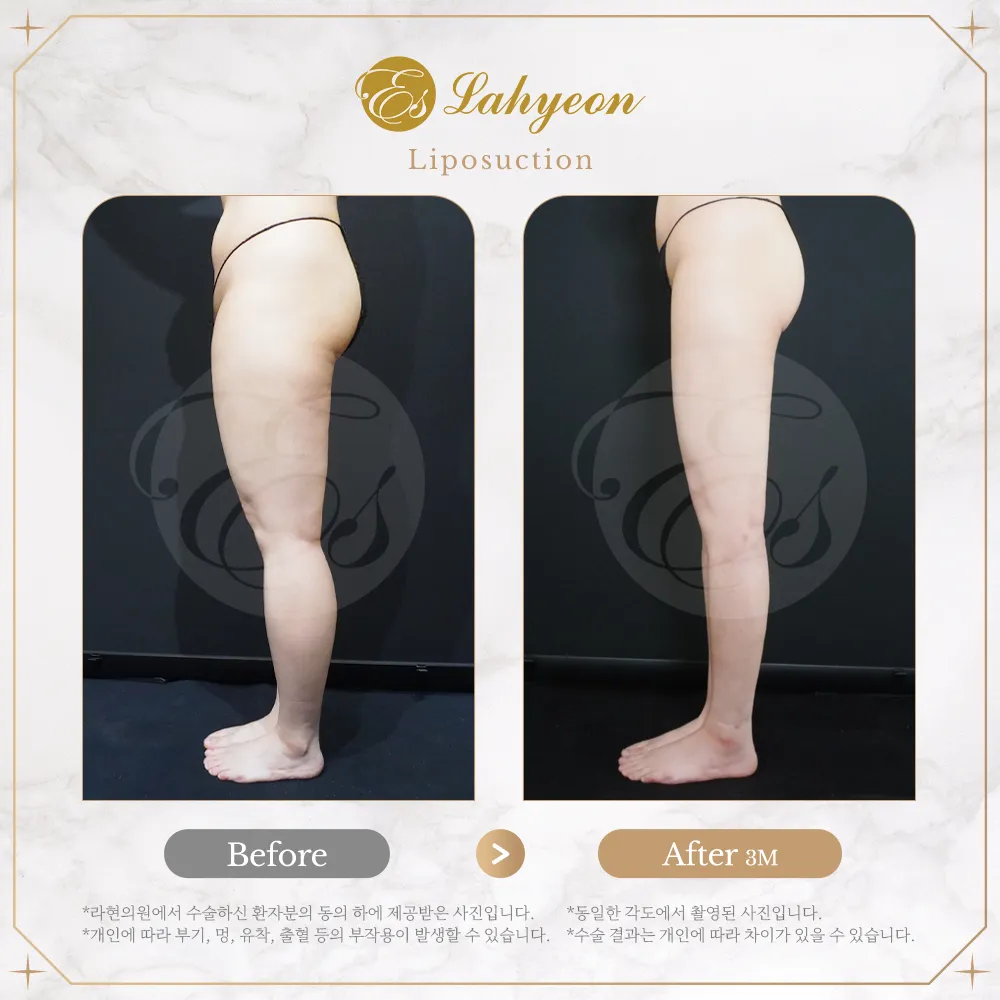
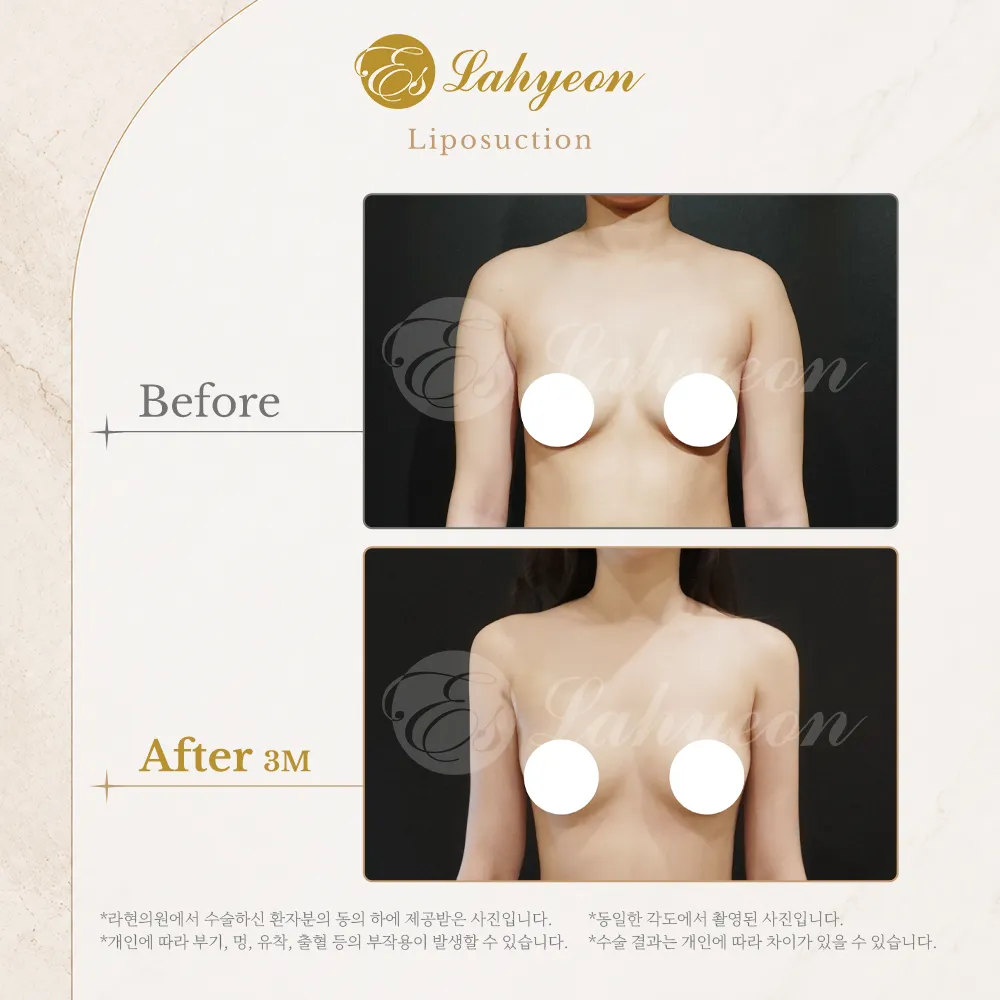
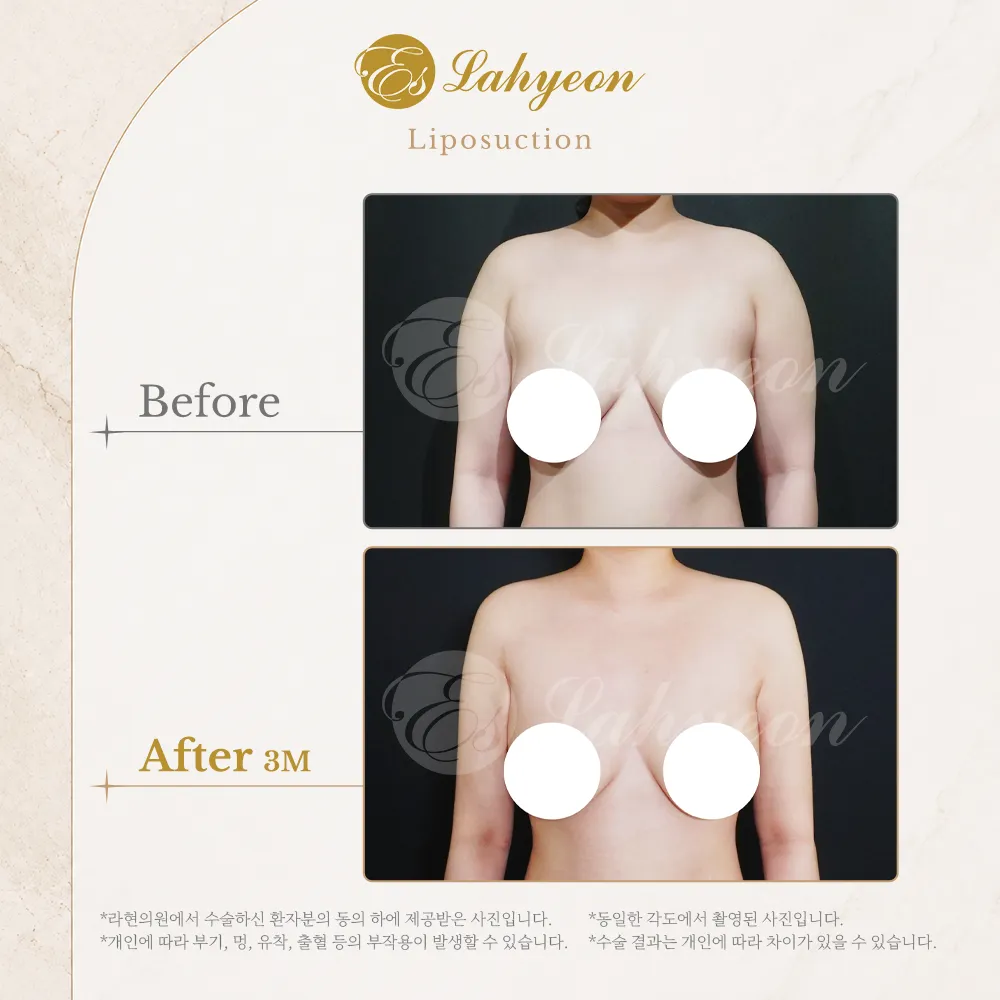
These are two of our patients before surgery and 3 months after, shared with their consent: one had the arms treated, the other the thighs.
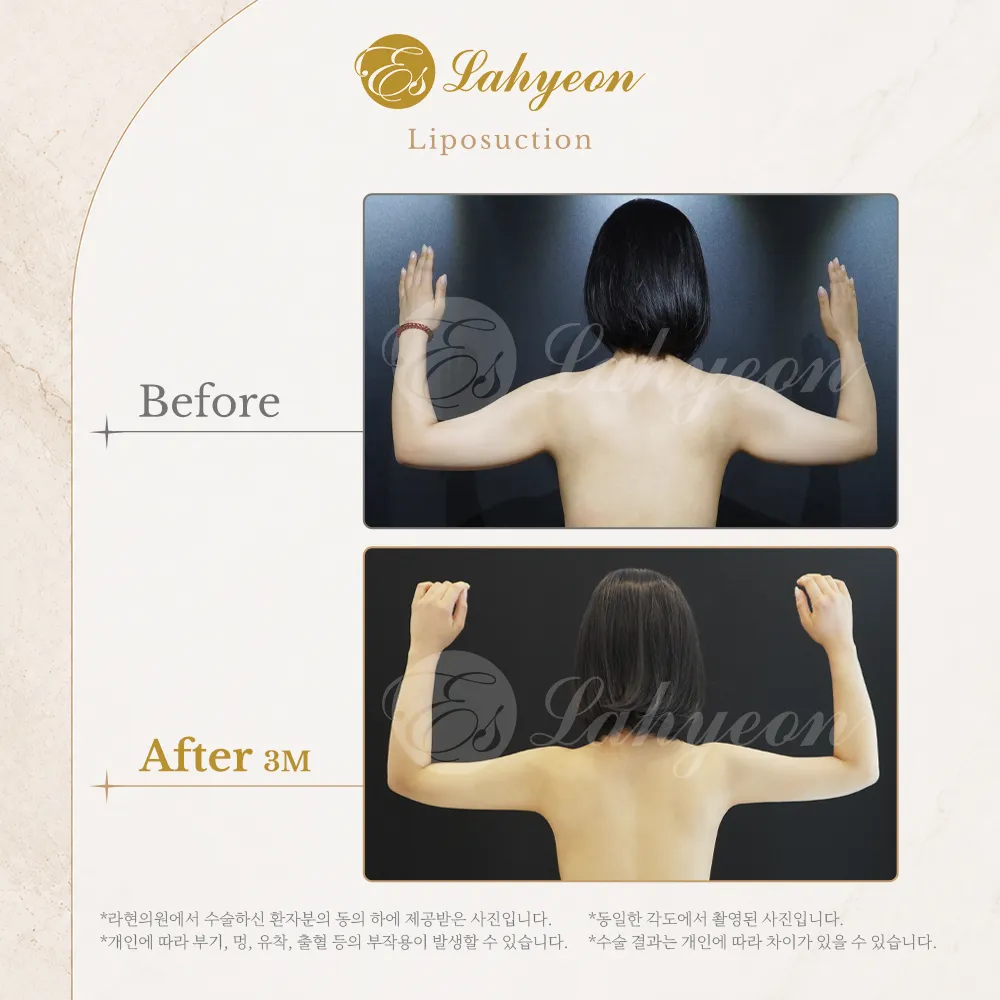
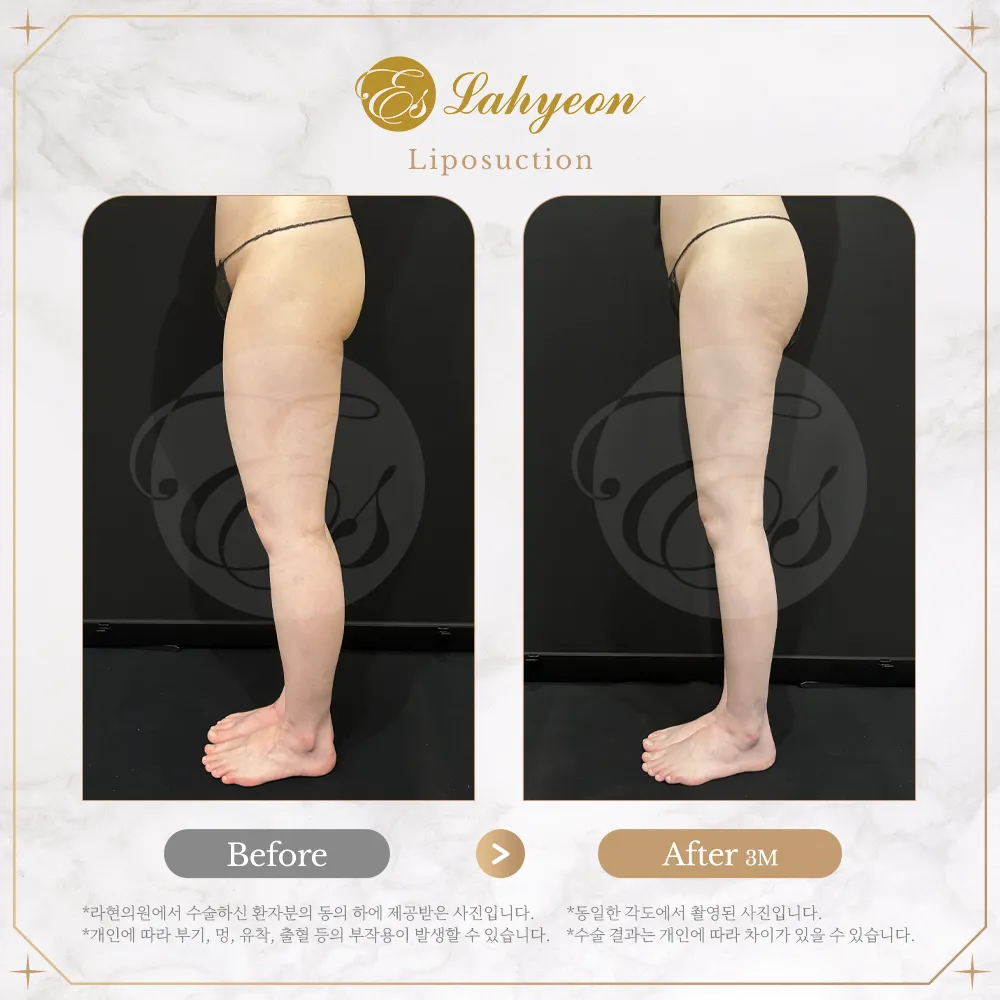
More cases are on our before and after page.
A patient who had her thighs and abdomen treated wrote this on Google while she was still recovering:
"Dr. Im Jung-woo kept me at ease right up until the sedation. At my age the weight wasn't coming off easily, so after thinking it over I had liposuction on my thighs and abdomen. The director checks on you carefully at follow-ups too. I'm still recovering, but I think it went well."
Google review, 2026-06-13 (translated from Korean)
Planning your trip to Seoul
The consultation
At consultation I assess the areas you want treated, the fat thickness, skin elasticity, and check you from the front, 45 degrees and the side. Then I mark the design based on the line each area should connect to. See the liposuction treatment page for the areas we treat.
Recovery timeline
| Time after surgery | What to expect |
|---|---|
| Day 1 | Compression garment on from the day of surgery. Swelling begins. |
| Days 2–3 | Most people return to daily routines, depending on the area and how much was treated. |
| Week 1 | The hardest week. Swelling, firmness and uneven-looking skin are common and are not the final result. |
| Weeks 1–2 | Most activities resume. Keep wearing the compression garment as instructed. |
| Month 1 | Swelling keeps settling at different speeds in different areas. Firm spots can still be felt. |
| Months 3–6 | The final line shows. |
Wearing the compression garment as instructed matters a great deal. Please take it seriously.
How long should you stay in Korea?
Allow at least the first few days in Seoul. Your exact schedule depends on the areas and amount treated, and we confirm it at consultation.
Flying home
Plan your flight once we have confirmed your check-up. Ask us how to wear the compression garment on the flight, and bring your aftercare instructions with you.
Aftercare at home
Keep wearing the compression garment for as long as instructed. Expect the surface to keep changing for months. If an area worries you, send us photos and tell us how long it has been since surgery and whether it feels hard or soft, so we can tell you whether it is part of healing.
Before you travel
Stop smoking and drinking before surgery and pause medicines that affect blood circulation. You receive detailed instructions individually at consultation.
What does liposuction in Korea cost?
I am not quoting a figure here. The price follows the plan, mainly:
- how many areas are treated
- the size of each area and the amount of fat
- whether fat grafting or skin-tightening care is added
You get a quote together with your plan at consultation.
Questions to ask any clinic
- Who does the consultation and the surgery, and who sees me at follow-up?
- How will you handle the borders between areas?
- Will you check me from the front, 45 degrees and the side?
- How do you assess my skin elasticity before surgery?
- How do you manage the surface and the line after surgery?
- What happens if an area still looks uneven after full recovery?