"Can my breasts get bigger without an implant?"
"How much of the fat actually stays?"
"If you put more in, will more stay?"
If you are considering fat transfer in Korea, you have probably read survival rates quoted as a single percentage and wondered which one to believe. Using your own fat sounds natural and appealing. But you are also planning a trip, and you want to know whether one session is enough or whether you will need to come back.
This post is worth reading because the honest answers to those questions change how you should plan both the procedure and the trip.
By the end you will know:
- why the amount injected is not the amount that stays
- how I place fat to give it a better chance of surviving
- when fat alone is enough, and when an implant plus fat makes more sense
- why I sometimes plan a second graft, and what that means for travel
- what real results look like at 3 months
- the recovery, how long to stay in Seoul, the one rule about smoking, and cost factors
Who is writing this
I am Dr. Im Jung-woo, representative director of LAHYEON Plastic Surgery in Cheongdam, Seoul. I am a board-certified general surgeon. I trained at Samsung Medical Center (Sungkyunkwan University), where I also served as an adjunct professor of surgery. I focus on body surgery, including fat grafting to the breast, face and body. I see each patient from consultation to follow-up myself. You can read about my background on my doctor page.
I wrote this because fat transfer is often sold with numbers it cannot honestly promise, and I would like you to know what to expect before you fly.
Fat transfer is about how much survives
When fat cells are moved, they lose their old blood supply. To survive in the new spot, they have to take oxygen and nutrients from the tissue around them. Some of the fat takes, and some is absorbed during recovery.
So with fat transfer you are building the volume that finally survives. That is different from an implant, where you can plan around a set volume such as 300cc or 350cc. If 200cc is injected on one side, you should not expect 200cc to remain.
Why I will not give you one survival percentage
You will see claims online like "X% of the fat survives." Survival depends on how the fat is harvested, how it is prepared, which layers it goes into and in what amounts, the condition of the receiving tissue, and your recovery, smoking included.
With that many factors, I cannot honestly tell every patient "exactly this percentage will stay." What I focus on is creating conditions that favor survival.
If you inject more, does more stay?
It seems logical that 300cc would leave more than 200cc. But fat behaves differently from a filler. If too much fat is packed into a limited space at once, part of it may not get enough contact with healthy tissue around it.
So before I ask how much I can put in, I ask how much this breast, or this area, can accept.
Is Fat Grafting right for you?
Tap what applies. We turn it into an inquiry, and our team replies with suggested next steps for your trip.
Hello, I'm interested in Fat Grafting at LAHYEON Plastic Surgery. Could you suggest a plan for me?
No booking until you confirm.
How I place the fat
I do not inject fat as one large mass. I place small amounts in several layers and several directions. Spreading it along many paths widens the contact area between grafted fat and the surrounding tissue.
In the breast, the volume you need may sit in the upper, inner, outer or lower part. I decide the distribution first, then place the fat. Before any total volume, I draw what I think of as a map of where the volume should go. To me, fat grafting is the skill of placing fat, more than the act of injecting it.
Breast fat grafting: what it suits
Fat grafting works well for upper breasts that look empty after childbirth, breastfeeding or weight loss, or for upper tissue that has always been thin. The aim is a curve that starts under the collarbone and runs smoothly to the nipple and lower breast.
Where the fat goes matters as much as how much. If the skin is already stretched or the breast sags a little, too much volume in the lower breast can make it look heavier and emphasize the sag over time. So I plan the upper, inner, central and lower parts separately, taking into account nipple position, the fold under the breast and skin elasticity.
How much bigger will I get?
Because people ask so often, I sometimes say that about 150cc of change on one side can feel like roughly one cup. Treat that as a rough guide only. Cup size also depends on your rib cage, existing tissue, breast base and band size, and not all injected fat survives. So I explain what natural increase is realistic for your breasts rather than promising a cup.
Can fat create cleavage?
The gap between the breasts depends on the shape of the rib cage, where the breast starts, where the chest muscle attaches and how your tissue is distributed. Putting a lot of fat on the inner side does not give everyone the same cleavage. I judge how much is natural within your anatomy.
Implant, fat, or both?
I do not treat these as competitors. An implant builds the overall structure, and fat can refine the detail. In a slim patient where the implant edge might show, if you want a softer upper breast, or to even out a small left-right difference, combining them can make sense. My post on breast augmentation in Korea explains the implant side.
Fat alone often satisfies people who say "I just want a little more natural volume," "an implant feels like too much," or "I only want my upper breasts filled." For a large change, we need to check whether fat alone can get you there.
Fat transfer to the face and body
On the face, fat can fill hollow areas such as the forehead, temples, cheeks, front of the cheekbones, nasolabial folds and chin. We use a fat-grafting method developed in Korea that aims for volume that lifts rather than drags the face down, placed layer by layer with the whole face in mind.
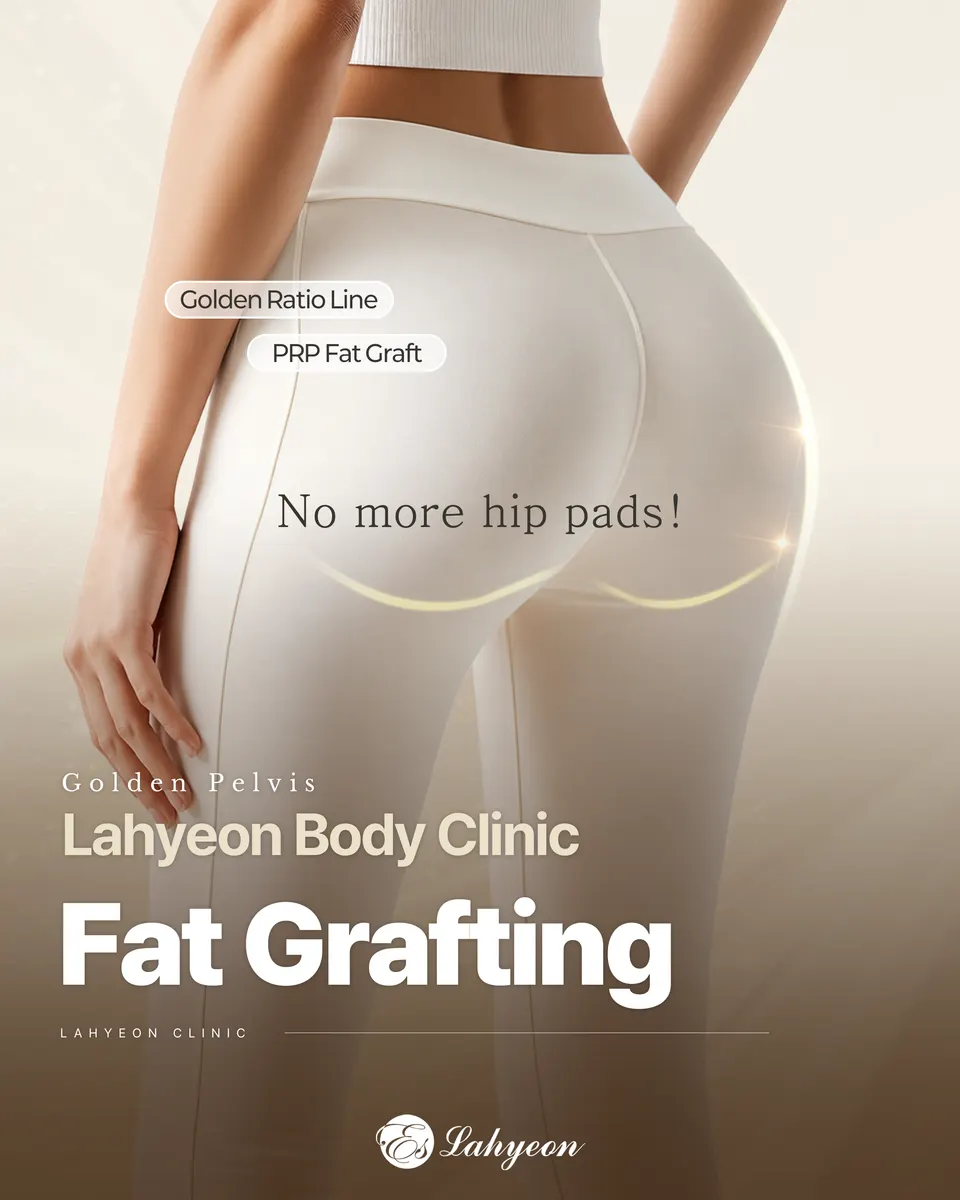
On the body, fat can go to the pelvis and hip dip for a softer, more connected line. When this is combined with liposuction of the waist, it becomes our Golden Ratio pelvis program, which uses PRP fat grafting: platelets concentrated from your own blood are used with the fat to support survival and tissue repair. See the fat grafting treatment page for the areas we treat.
I'm slim. Can I still have fat transfer?
Often, yes. Because it uses your own fat, the amount you can spare shapes the plan. Fat is usually taken from the abdomen, flanks or thighs. I check where it can come from and how much can be taken naturally. With very low body fat, the amount may limit what is possible.
Why a second graft can help
Your two breasts were never identical in tissue, skin, rib cage or blood flow. So fat may not survive at the same rate on each side, and a small difference can appear even if both looked similar before surgery.
For larger volume goals I prefer to graft in stages rather than force too much fat in at once. After the first session I check how much survived, whether there is a left-right difference and which area needs more, then refine it in a second graft. That is a realistic way to think about fat transfer: a first graft, then a check, then fine-tuning if needed.
For you as a traveller, this means it is worth asking at consultation whether a second graft is likely in your case, so you can plan for a possible return visit.
What do real results look like?
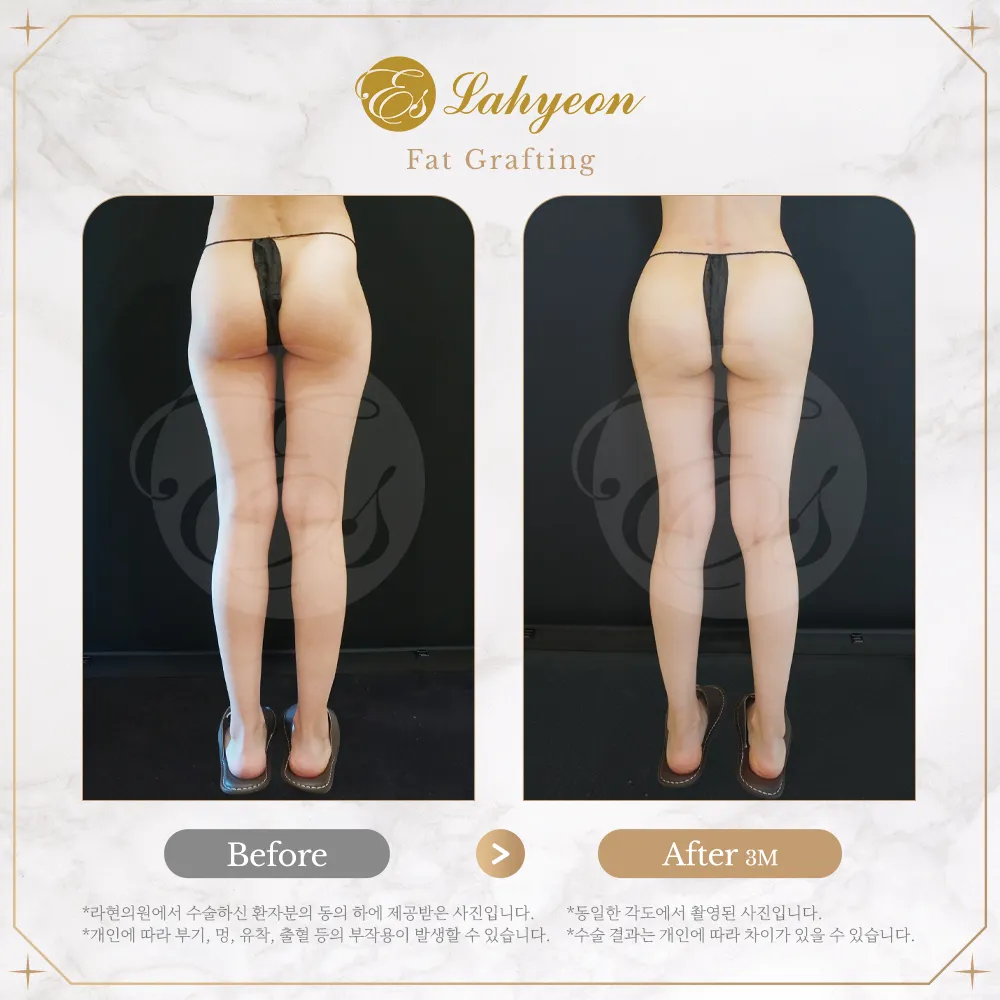
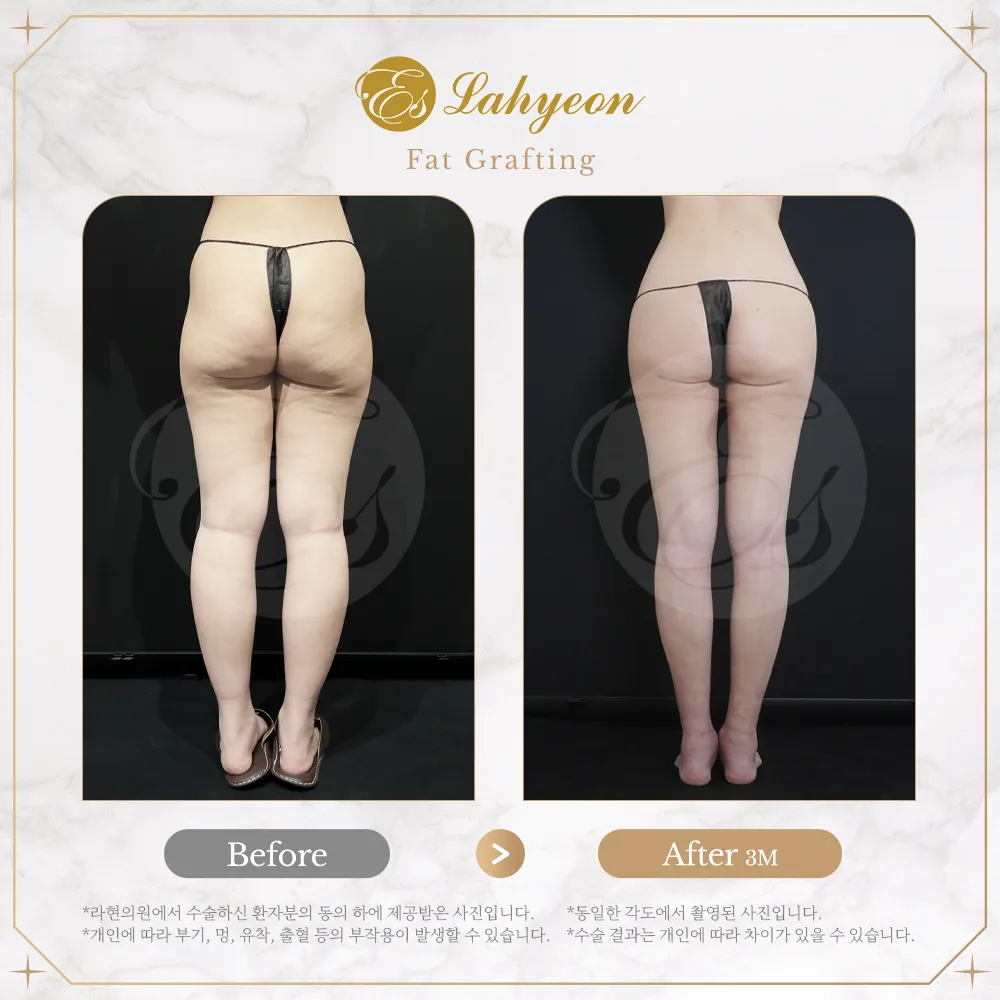
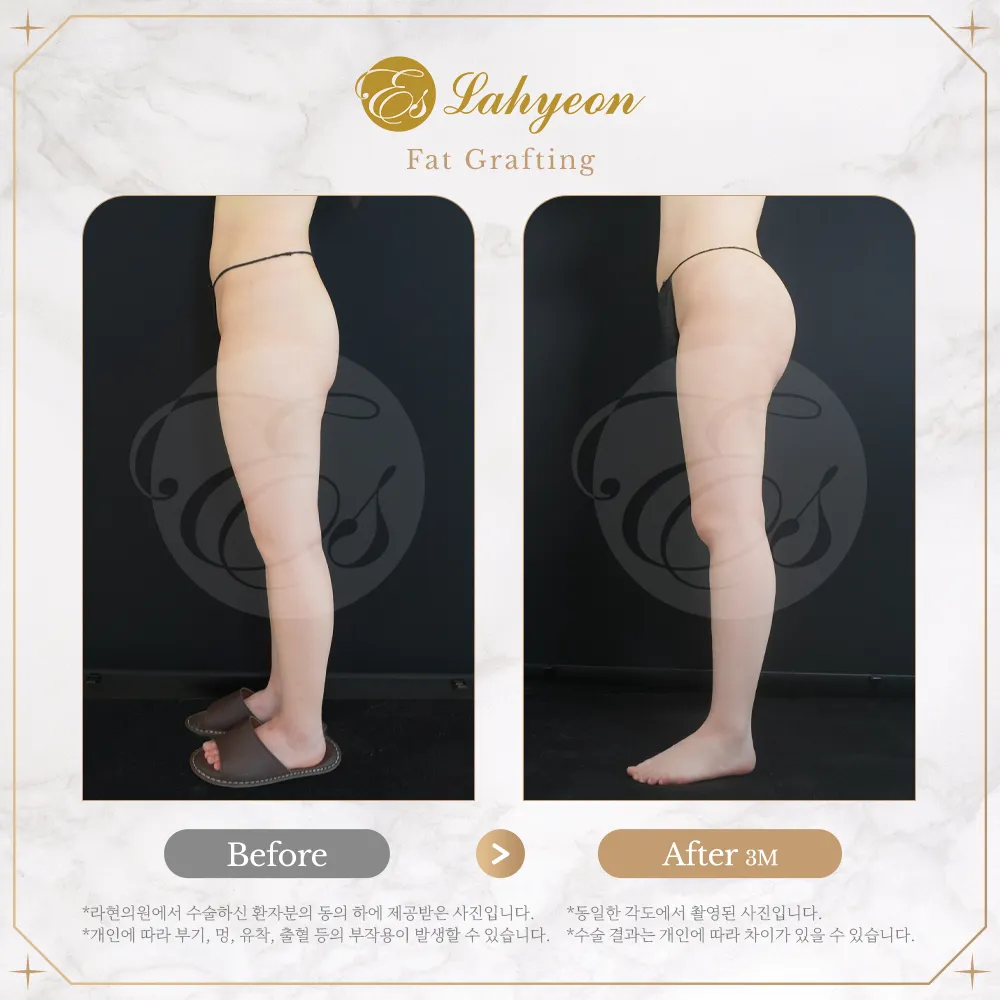
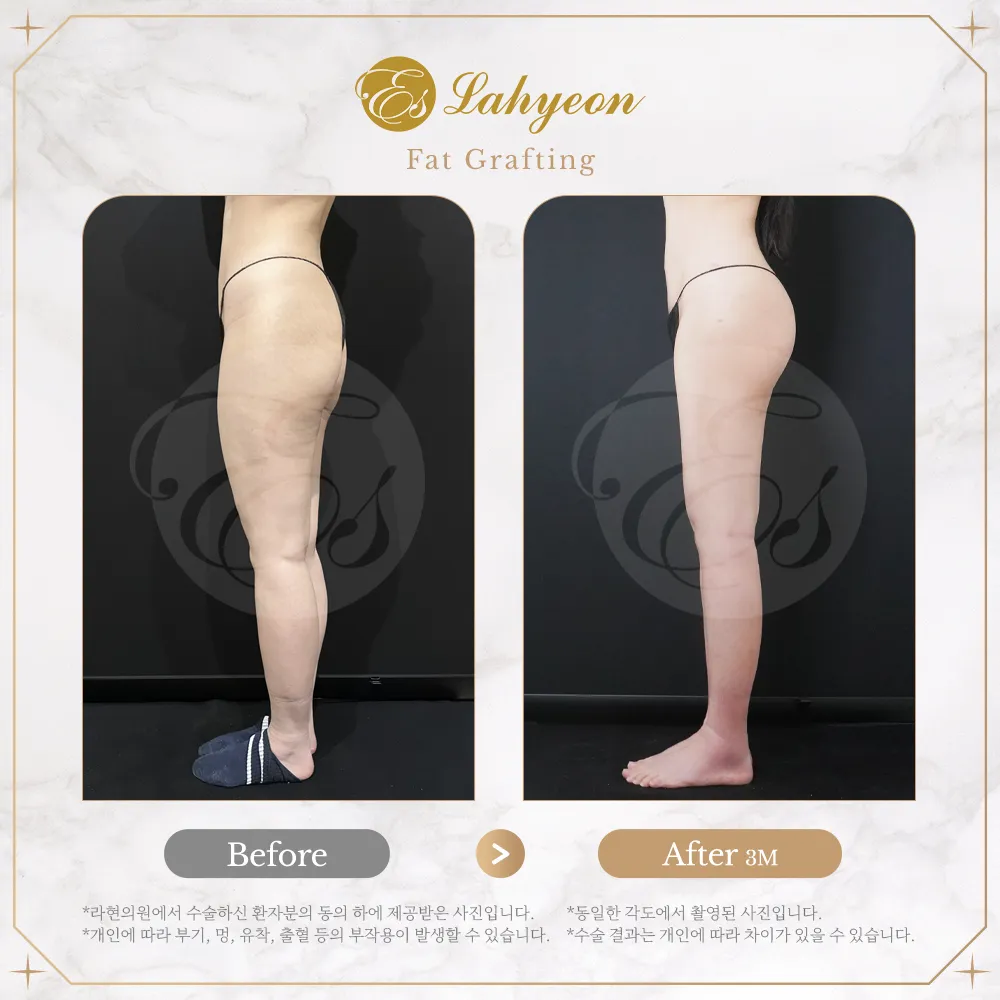
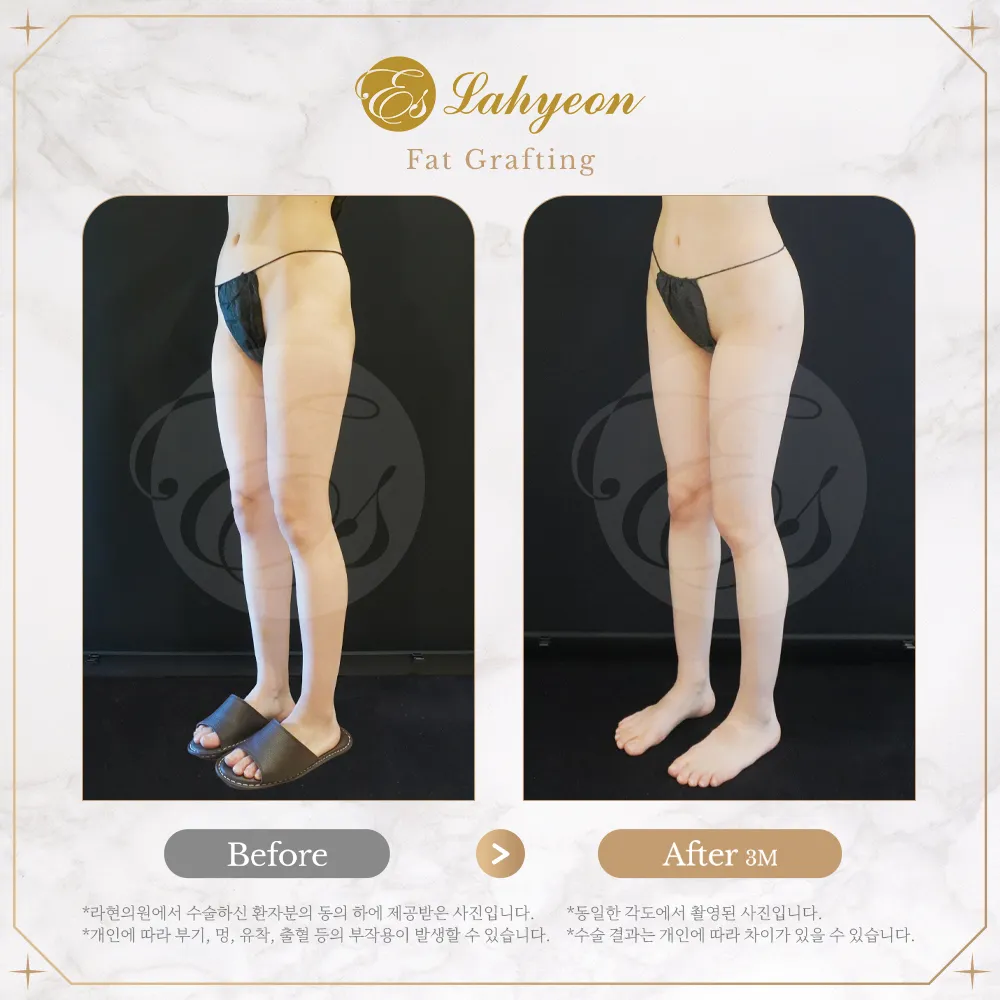
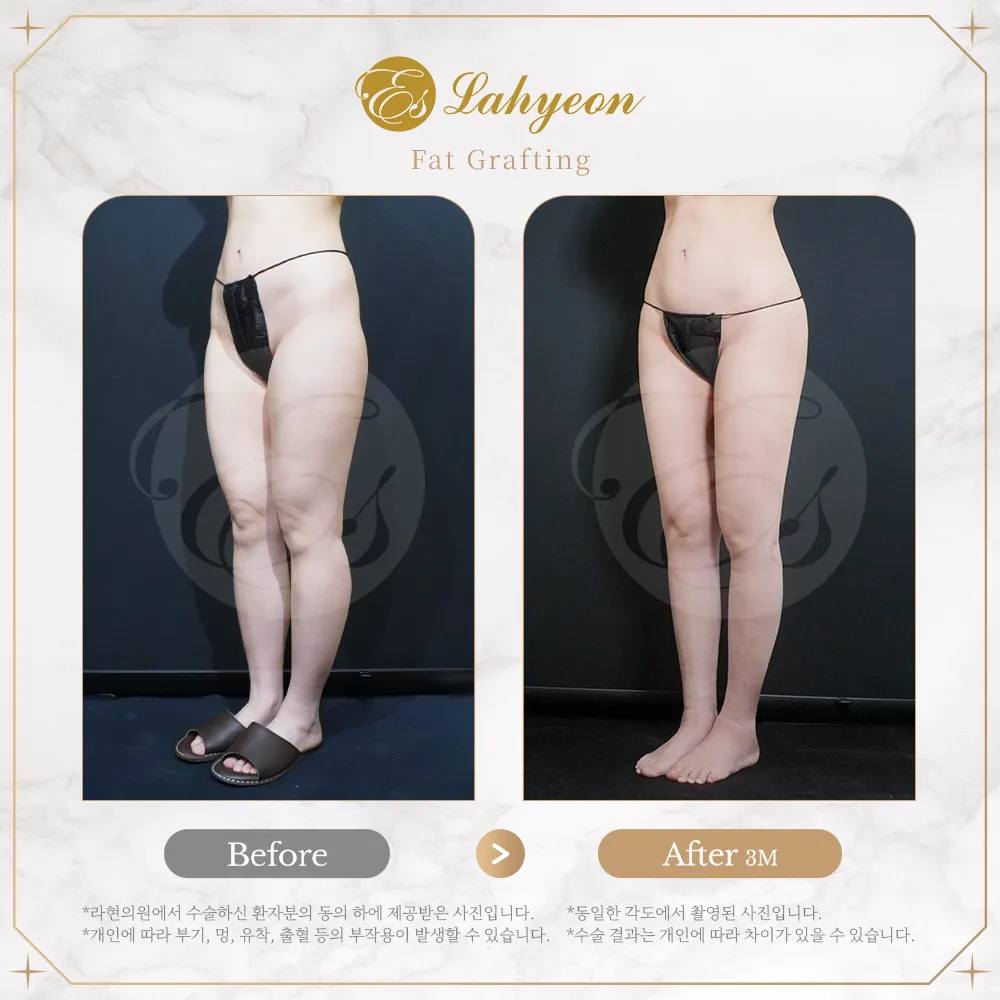
These are two of our patients who had fat grafted to the hip area, photographed before surgery and 3 months after, and shared with their consent. Three months is around when the surviving volume starts to become clear.
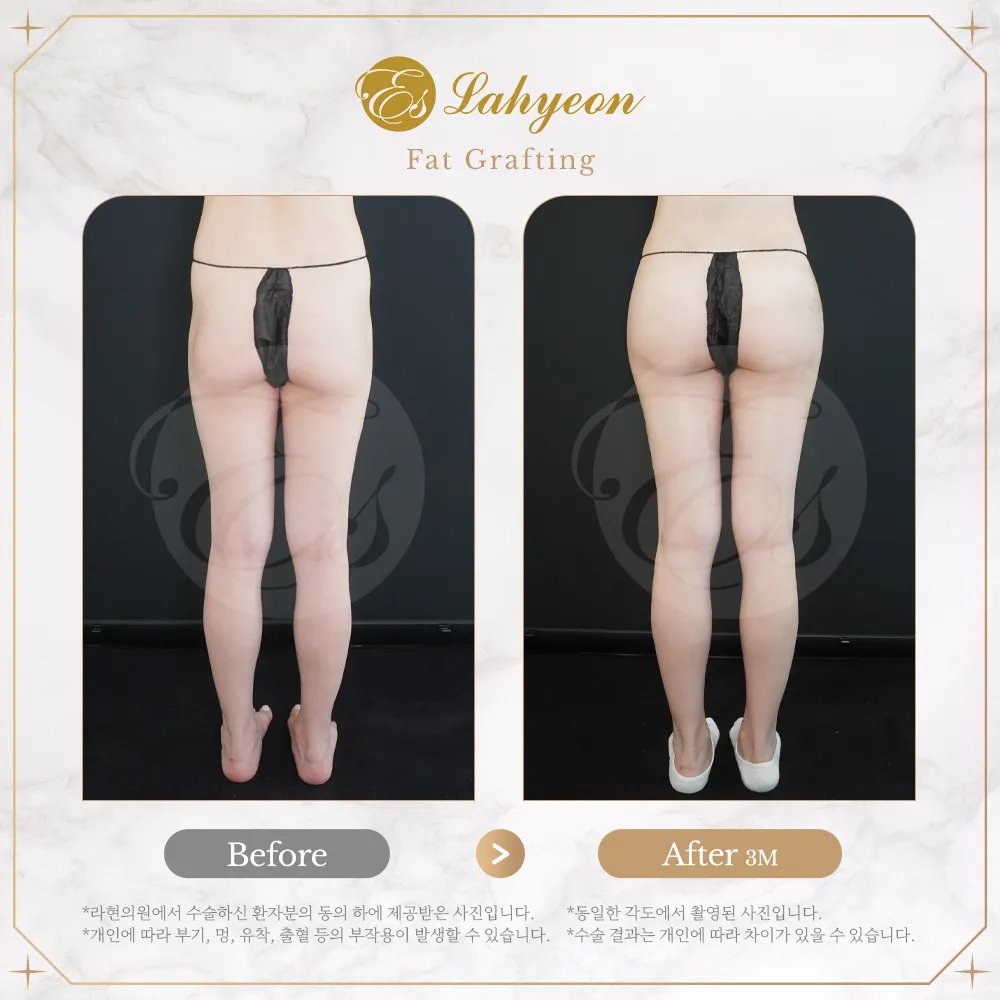
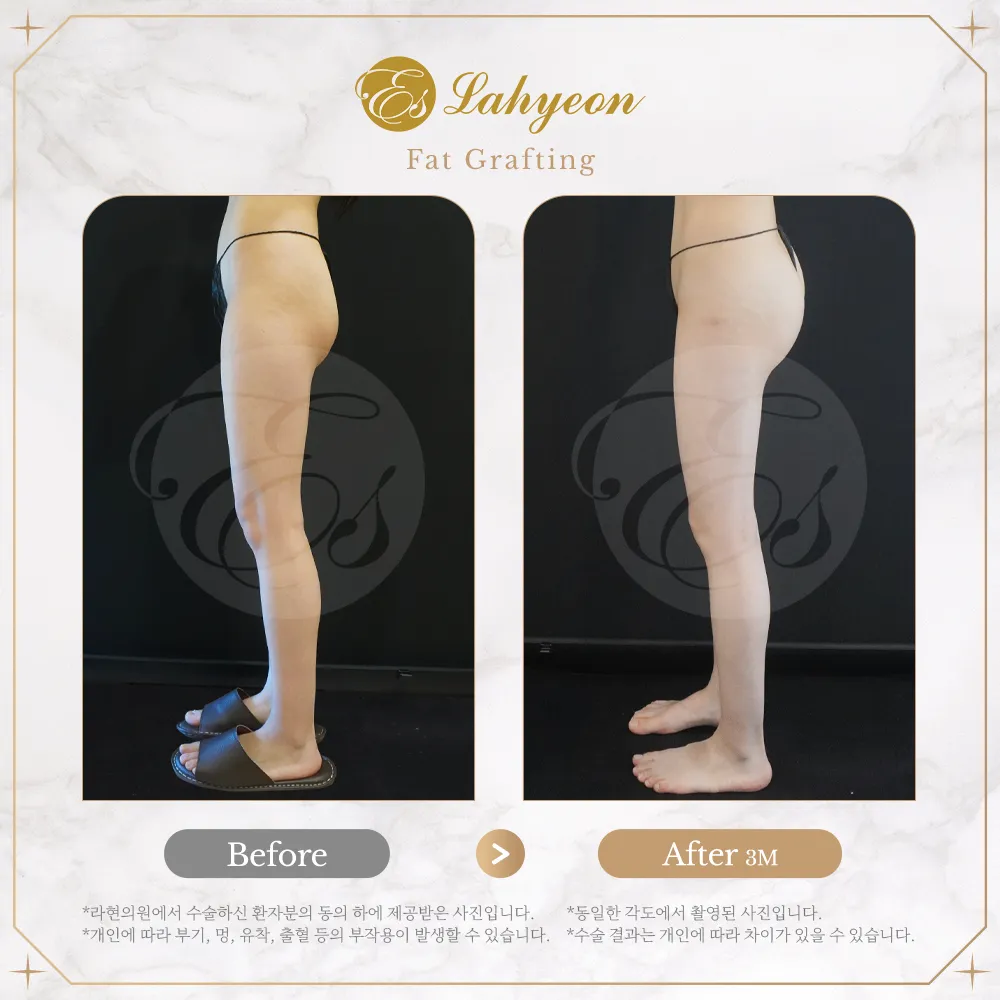
More cases are on our before and after page.
None of our Google reviews names fat grafting yet. This one does not say which treatment the patient had, but it describes the kind of consultation we aim for:
"At the first consultation they listened to my concerns properly. There was no push to book a treatment; they explained honestly only what I needed, which made me trust them and decide without pressure."
Google review, 2026-07-09 (translated from Korean)
No smoking. Really.
This is the instruction I repeat the most, usually about five times in one consultation.
Grafted fat has to establish a new blood supply to survive. Nicotine narrows blood vessels and reduces blood flow to tissue. So avoid smoking before and after fat grafting, including e-cigarettes and any other nicotine products. Please stay away from other people's cigarette smoke as well.
Planning your trip to Seoul
The consultation
We discuss what you want, then I check your breasts or target area, your donor fat, skin and any asymmetry, and plan the distribution of volume. If a staged graft is likely, I tell you at this point.
Recovery timeline
| Time after surgery | What to expect |
|---|---|
| Day 1 | Swelling at the grafted area and the donor area where fat was taken. No smoking or nicotine. |
| Week 1 | Swelling and firmness at the donor sites are part of healing. Keep avoiding nicotine. |
| Month 1 | Swelling keeps settling. The grafted fat is still establishing its blood supply, so the volume you see is not yet final. |
| Months 3–6 and later | The volume that survived becomes clearer. If a second graft may be needed, I assess it once survival can be judged, and we set the timing together. |
For the Golden Ratio pelvis program, most people return to light daily activities after about 3 to 7 days, and a compression garment is recommended. For other areas, we confirm your recovery plan at consultation.
How long should you stay in Korea?
It depends on the areas grafted and where the fat is taken from. We confirm your schedule at consultation.
Flying home and aftercare at home
Keep avoiding nicotine after you get home, because the early recovery period is when it matters most. Follow the instructions we give you on compression for the donor areas. Fat that survives becomes part of your own tissue, so there is no implant to check later.
What does fat transfer in Korea cost?
I am not quoting a figure here. The price follows the plan, mainly:
- which areas receive fat and which areas it is taken from
- whether it is combined with an implant or with liposuction
- whether a staged second graft is planned
You receive a quote with your plan.
Questions to ask any clinic
- Do you promise a survival percentage? If so, how do you know it applies to me?
- How do you place the fat: in one area, or in small amounts across layers?
- How will you distribute volume across the upper, inner and lower breast?
- Do I have enough donor fat for my goal?
- Is a second graft likely for me, and when would it be assessed?